What Is A Young Carer?
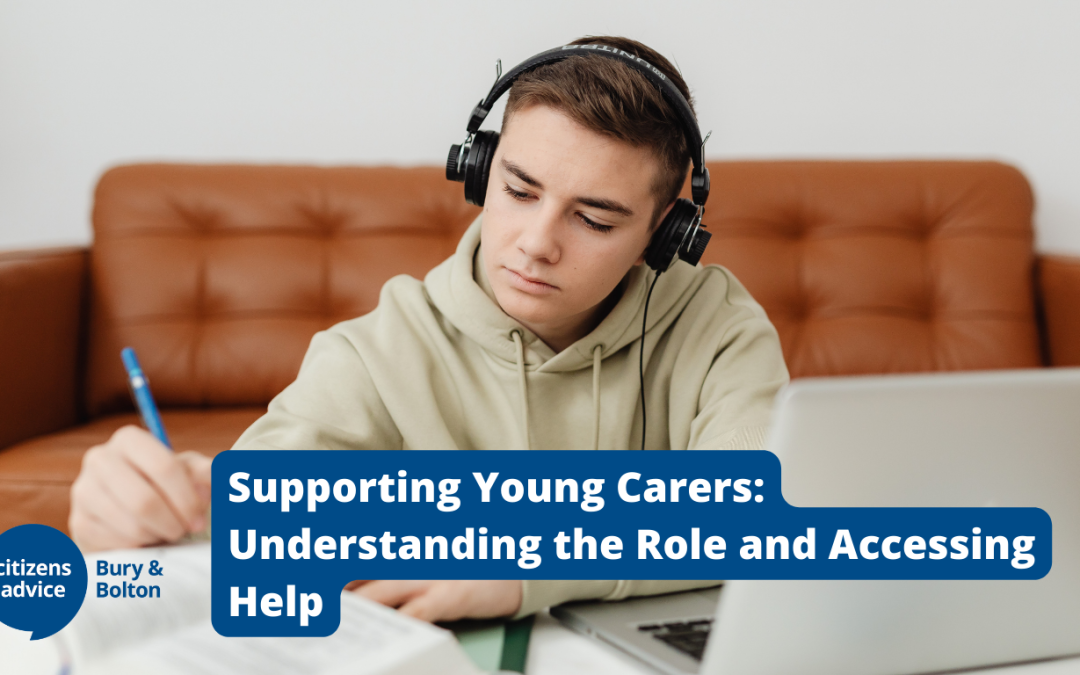
A young carer is defined as a person under the age of 24 who regularly provides emotional and/or practical support and assistance for a family member who is disabled, physically or mentally unwell, or misuses substances. They often take on responsibilities normally handled by an adult, such as cooking, cleaning, managing medication, or providing personal care.
Not sure if you or someone you know is a young carer? Take a look at some of our case studies below to see if they are similar to your situation.
What is a Carers Assessment
A young carer’s assessment can determine whether it’s appropriate for you to care for someone else and takes into account whether you want to be a carer.
You or your parents can request an assessment, your local council must organise a young carer’s assessment if there is a child carer in the home.
What Support We Can Offer
Full advice on assessments whether that be for the person needing care or the carer.
If you are under 24 and you need assistance to request a carers assessment, we could support you with this.
Should you or the person you care for be refused an assessment or any services we can challenge the Local Authority or other statutory agencies.
Should you be residing in a property that is no longer suitable we can give full advice on housing and how housing can be brought into your assessment.
To get support, you can visit one of our offices, a local outreach, or can complete an online referral form. Details can be found by visiting our website
Other Support Outlets
Case Studies
Here are some examples of clients who presented to us as Young Carers issue and what support we provided to help them find a way forward:
Case Study: Reducing Pressure on Young Carers Through the Right Support
Our client approached our service as they were living with disabilities and increasingly relied on their two children for support at home. Over time, their care needs had grown, and they began to feel that the responsibility placed on their children was becoming too great.
The client’s children were aged 21 and 12. The eldest was attending university, while the younger child was in high school. Both had taken on caring responsibilities for their parent.
The client shared that their eldest child had begun to miss opportunities to socialise with friends at the weekends. Their younger child, who enjoyed playing football, had stopped taking part in after-school activities because they felt they needed to stay home to help their mum.
Concerned about the impact this was having on both children, we advised the client to request a Needs Assessment and a Young Carer’s Assessment for their son.
Following the assessments, a support plan was put in place. The client was provided with aids and equipment to support their independence while they waited for a wet room adaptation to be installed, allowing them to shower more safely and independently.
The assessment also confirmed that the client was eligible for care support in the home. They were awarded 15 hours of care per week through Direct Payments, which allowed them to arrange support from someone they trusted. The client chose for their sister to take on the caring role.
This arrangement made a significant difference for the whole family. With additional care in place, the client’s son was able to take part in after-school activities again, including football. Knowing that his aunt was providing care also helped him feel more relaxed and less worried while at school, and his grades began to improve.
At the same time, the eldest daughter was able to spend more time with friends and enjoy a more typical student life while continuing her university studies.
By ensuring the right support was in place, the family were able to reduce the pressure on the children and allow them to focus on their education, wellbeing and social lives.
Case Study: Supporting a Young Carer to Balance Education and Caring
Our client was a first-year college student living with her mother, who had recently developed significant physical care needs following an accident.
After leaving hospital, her mother was provided with several aids and adaptations in the home. However, she still required support with day-to-day tasks such as preparing meals, dressing and showering, and taking medication.
At first, our client believed she would be able to manage both her college studies and caring for her mother. Over time, however, the demands of balancing education with caring responsibilities became overwhelming. She approached our service for support as she was struggling to keep up with her studies while also meeting her mother’s care needs.
We supported the family by making a referral to Adult Social Services. We requested a Needs Assessment for the mother and a Carer’s Assessment for our client.
Following these assessments, it was agreed that professional carers would visit the home each morning to help the mother with showering and getting dressed. A second visit at lunchtime was arranged so that medication could be administered and additional support provided if needed.
At weekends, three hours of care were arranged. This gave our client the opportunity to spend time with friends and take a break from her caring responsibilities.
These changes made a significant difference. With professional support in place during the day, our client was able to focus on her college studies and still spend time with her mother in the evenings, which was important to her.
As the young carer was in non-advanced education, there was no charge for the care support provided.
We also identified that our client needed a new laptop, as her existing one was no longer suitable for her college work. Through Carers Support, we were able to provide a voucher to help her purchase a replacement laptop, enabling her to continue her studies more effectively.
This support helped relieve some of the pressure she was experiencing and allowed her to focus on both her education and her wellbeing.